What the next generation of wealth holders will expect from brands, content and digital experience.
Read time: 5 minutes.
08/26/2026
Market signals: The Great Wealth Transfer

Executive summary
The Great Wealth Transfer will reshape how wealth managers are researched, assessed and selected as assets pass to younger, more diverse audiences. Digital fluency, intuitive user journeys and client-relevant content will become baseline expectations, yet many firms still fail to translate strong propositions into genuinely human-centered experiences. To earn the trust and loyalty of the next generation, wealth managers must extend tailored advice beyond the client meeting – embedding content personalization, audience understanding and digital relevance into the core client proposition.
The world’s financial landscape is approaching a generational realignment, as vast quantities of wealth pass into younger hands. With Cerulli estimating that $124 trillion in wealth will transfer through 2048 - including approximately $105 trillion passing to heirs and $18 trillion going to charity – the Great Wealth Transfer gaining pace, and wealth management firms are beginning to fortify themselves for this new environment.
How can firms position themselves for this shift? What will younger generations demand from their wealth managers – and what will they consider non-negotiable?

Changing expectations
In the post-pandemic environment, Sitecore found that 63% of Gen Z consumers have become less patient with slow or poorly functioning websites. Yet, while younger audiences increasingly expect digital fluency, many wealth managers have yet to establish the foundations of a strong digital experience.
In other words, the state of basic digital hygiene leaves much to be desired.
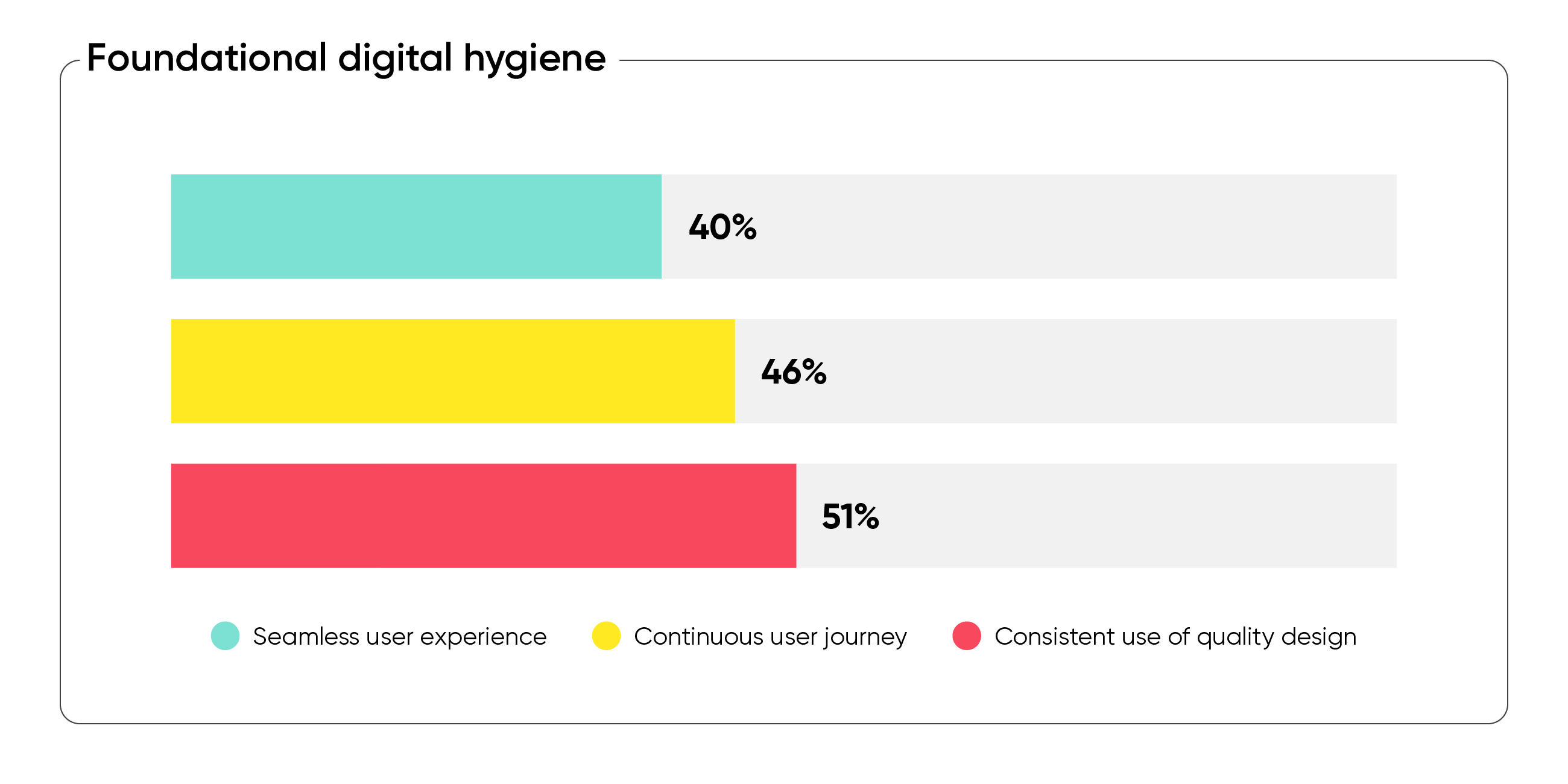
Our Living Ratings research found that while brands are strong at stating up-front who they are and what they do (97% of firms spotlight their brand positioning on the home page), only 40% of firms provide a fluid and intuitive user experience. Just 46% build a continuous user journey, and only 51% consistently use brand and design to make their content more accessible, engaging and effective.
The signal: Digital infrastructure is a critical starting point
Gen Z has grown up navigating life through digital interfaces and platforms. They are not simply comfortable with digital experiences; they are highly attuned to how effectively those experiences function. Seamless journeys, intuitive platforms and frictionless access are baseline expectations, while weak digital experiences risk being quickly disregarded or ignored entirely.
Firms seeking to attract and retain a generation accustomed to responsive and intuitive experiences will need to extend the principles of high-touch personalized wealth advice beyond the client meeting and into every stage of the digital journey.
Personalization of content and experience
Beyond fundamental digital hygiene, content personalization is an increasingly key priority and central expectation for younger audiences. Deloitte reports that 51% of Gen Z and 53% of millennials would spend more with a brand that offered a personalized experience, compared with 38% of Gen X and 19% of baby boomers. Despite this growing demand, the wealth management digital experience remains largely undifferentiated.
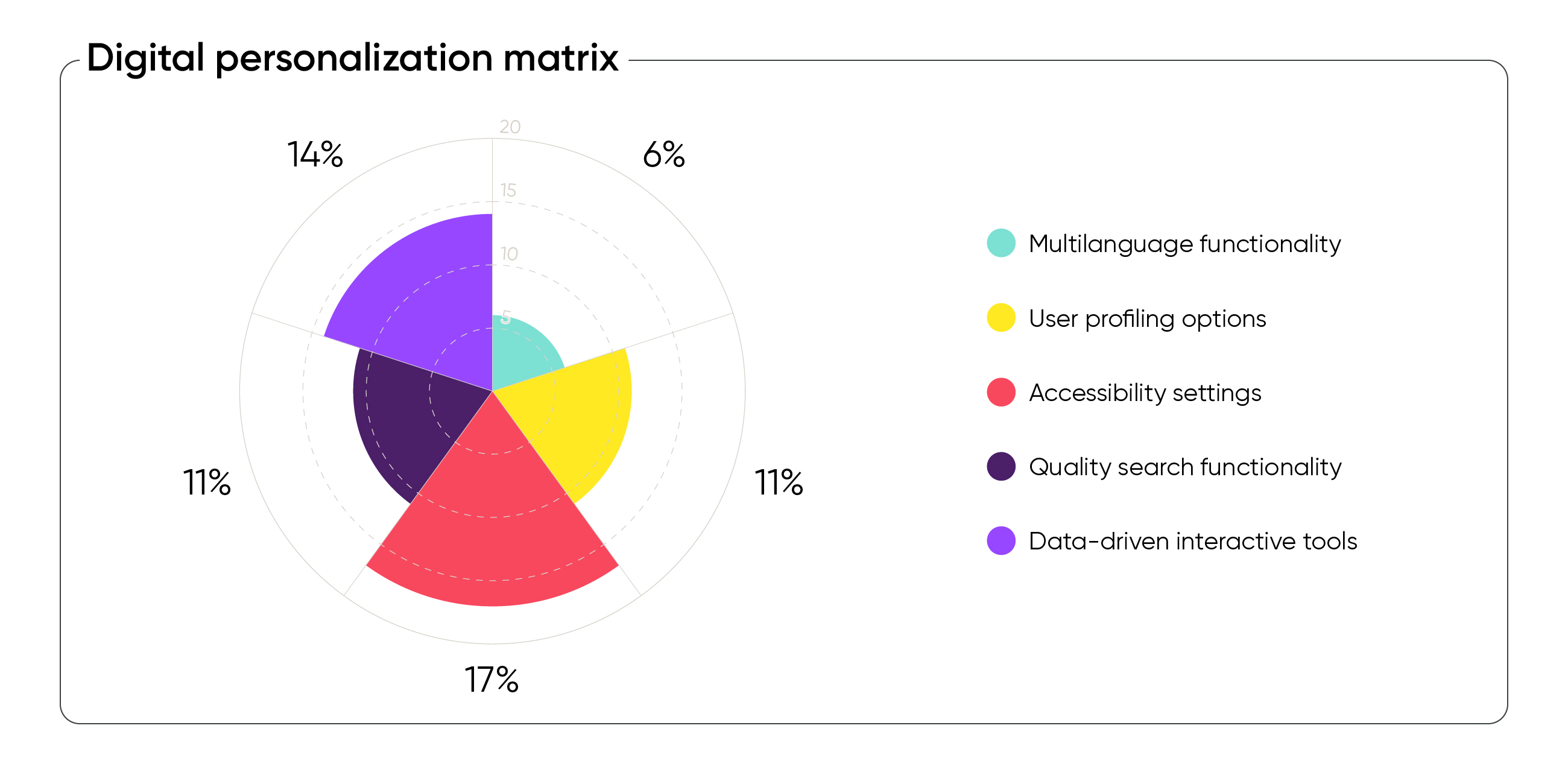
Only 6% of firms offer extensive multilingual functionality, while 11% provide user-profiling options. Just 17% offer accessibility settings, 11% deliver high-quality search functionality and 11% of sites provide data-driven interactive tools. When it comes to structured FAQs and query-answer content, only 51% of firms deliver.
The signal: Tailored services do not extend online
Fiduciary industries – from legal services to management consultancy and wealth management itself – are built around tailored advice and a detailed understanding of each client’s precise needs and circumstances. Yet this commitment to individualisation often fails to extend into the digital environment. In short, content personalisation and user-specific discovery remain underdeveloped across the wealth management sector.
Needs, priorities and human realities
Yet digital fluency alone will not secure the attention of the next generation of wealth holders. A final point of focus is that of recognizing user priorities, experiences and ambitions in the content presented to them.
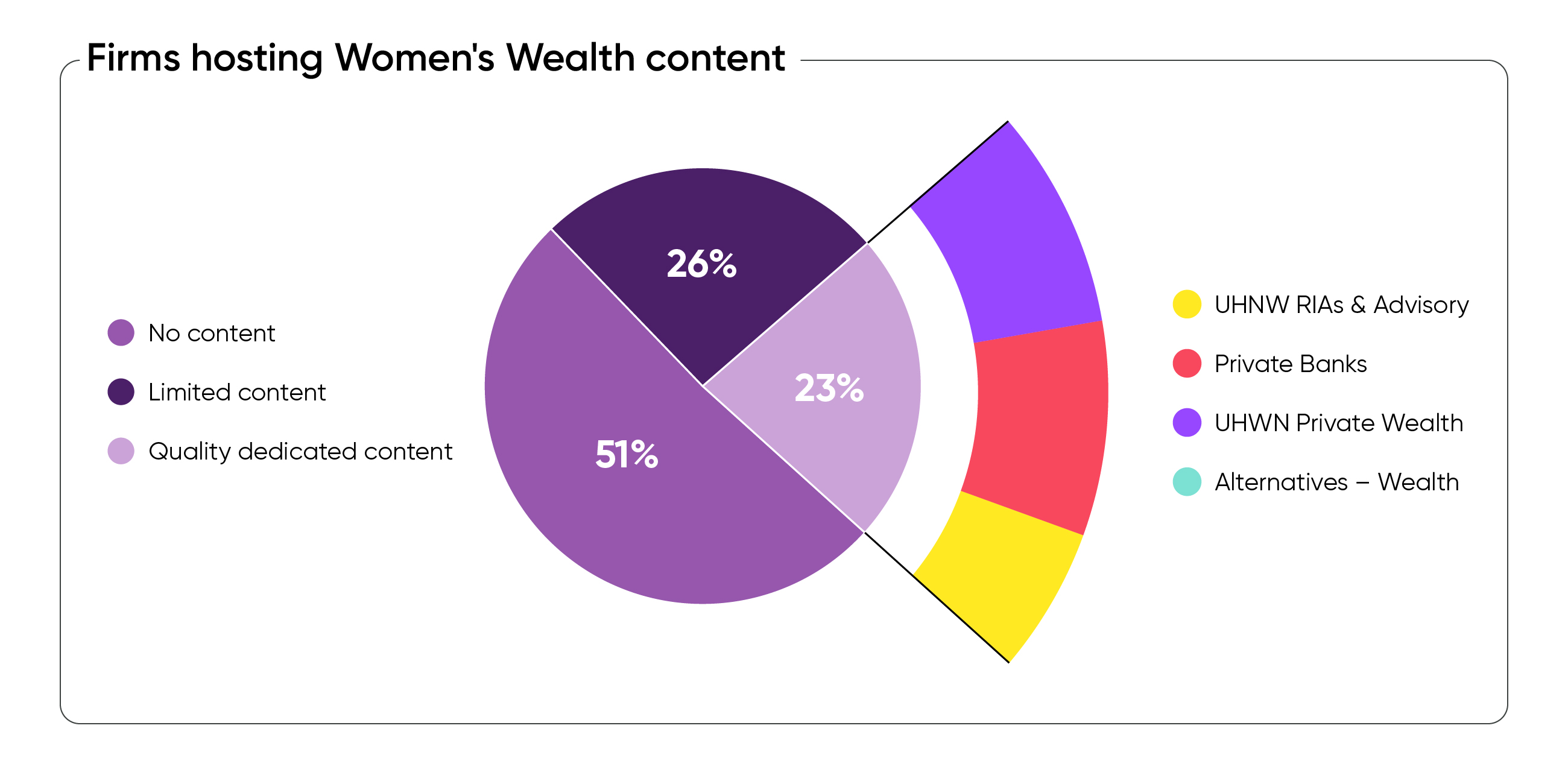
Our research shows that in this year’s Living Ratings of Wealth Management firms, 51% of firms host no dedicated Women’s Wealth content at all. 26% of firms do offer some limited or unstructured content, while only 23% of firms deliver a quality dedicated site destination.
Of those firms, UHNW Private Wealth and Private Banks are equally represented, each accounting for 37.5%, while UHNW RIAs & Advisory make up the remaining 25%. Alternative Asset Managers however, are missing out entirely.
The signal: The wealth transfer demands greater empathy
The coming transfer of wealth is not only generational; it also has an important gender dimension. Cerulli estimates that nearly $40 trillion will initially pass to widowed women in Baby Boomer and older generations, before a further wave of intergenerational transfer sees younger women receive approximately $47 trillion by 2048. As more women assume responsibility for creating, inheriting and directing wealth, firms must demonstrate a credible understanding of the financial circumstances and decisions that shape their lives.
By reflecting the realities of this audience, firms can demonstrate empathy, establish relevance and build recognition before an advisory relationship begins. Content in this space does more than signal social and political awareness – it speaks directly to a client base that will control an increasingly significant share of global wealth. In the coming years, wealth managers will therefore need to move beyond a largely undifferentiated view of the investor.
The same principle applies to values-driven and responsible investing. Whether around sustainability or broader impact strategies, younger investors increasingly expect financial decisions to reflect their wider social, environmental and personal priorities. Firms must make their approach to these issues visible, comprehensible and sufficiently detailed to support informed judgement.
Why this matters
The Great Wealth Transfer is therefore as much a challenge of relevance as it is one of asset retention. As wealth moves between generations, long-standing client relationships cannot simply be assumed to transfer with it. Firms will increasingly need to earn the attention and confidence of individuals whose expectations of brands, technology and service have been shaped in a fundamentally different cultural environment.
This raises the stakes for the digital experience. A website is no longer simply a gateway to the adviser relationship; it is increasingly where credibility is assessed, expertise is explored and the first judgement about relevance is made. Weak journeys, generic content or limited functionality risk creating a disconnect between the highly personalized service firms promise and the experience they deliver before a conversation has even begun.
The opportunity is to make that digital experience an extension of the advisory proposition itself: intuitive enough to remove friction, personalized enough to reflect individual needs, and perceptive enough to demonstrate an understanding of the priorities shaping a changing wealth audience.

Conclusion
This critical new era proposes to change more than who holds wealth. It has the potential to force the wealth management industry into reevaluating how it is presenting, structuring and delivering its value and expertise.
For many firms, this will require more than incremental improvement. It will mean treating digital infrastructure, audience understanding and content relevance as core components of the client proposition rather than supporting functions.
Those that succeed will be the firms able to translate advice into a personalised experience and demonstrate a credible understanding of the people, values and aspirations shaping the next generation of wealth.
The result will be an emerging class of wealth management firms that use the digital landscape as a launchpad for genuine competitive differentiation.
Executive takeaways
- The Great Wealth Transfer will redefine how wealth managers earn attention, trust and loyalty.
- Foundational digital hygiene will become a baseline expectation rather than a competitive advantage.
- Relevance will increasingly depend on genuinely tailored experiences and a deeper understanding of emerging wealth holders’ needs, values and priorities.
Want to know more?
Connect with one of our specialists: Kate Shaw in New York, Greg Hobden in London or Aliena Lai in Hong Kong.


Our latest insights, directly to your inbox